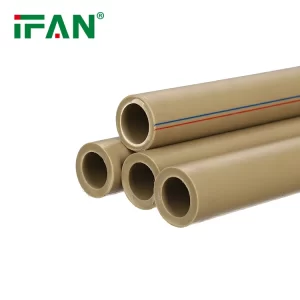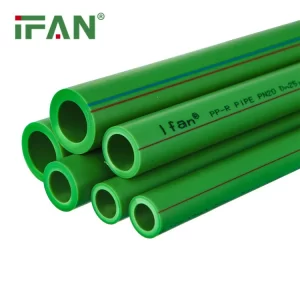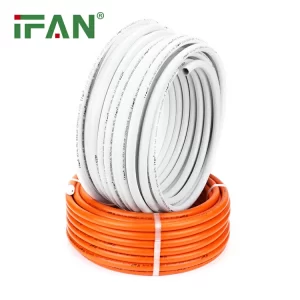
PPR three-layer composite pipe — known in premium lines as fusiotherm ppr with fiberglass reinforcement (FRP) — combines the proven 50-year durability of standard PPR with dramatically reduced thermal expansion and higher pressure rating by embedding a middle layer of glass fibers. This advanced design cuts linear expansion by up to 75%, eliminates the need for expansion loops in most installations, and allows longer straight runs without sagging. You will discover exactly how the three-layer construction works, why it outperforms aluminum-layered PPR in many cases, and when this modern composite delivers the biggest benefits for heating and hot water systems.
FAQ: Most Common Questions About PPR FRP Three-Layer Pipe
What does FRP mean in PPR pipes?
FRP means Fiberglass Reinforced PPR — a middle layer of glass fibers bonded between two layers of PP-R.
Is three-layer FRP better than standard PPR?
Yes for long exposed runs, high-temperature heating, and when you want fewer expansion loops.
Do I still weld FRP pipe the same way?
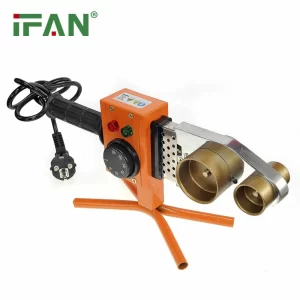
Yes — exactly like normal PPR at 260°C. The fiberglass layer fuses perfectly with standard tools.
Is FRP more expensive than regular PPR?
Yes, 25–40% higher, but you save on fittings, supports, and labor.
Can I mix FRP and standard PPR in the same system?
Absolutely — they weld together perfectly and share the same fittings.
How Three-Layer FRP Construction Works
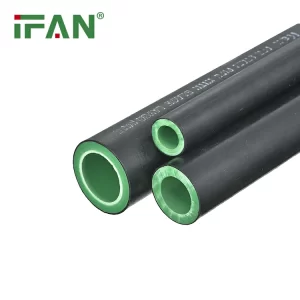
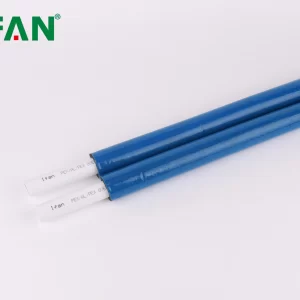
The pipe consists of three perfectly bonded layers:
- Inner layer — 100% virgin PP-R (drinking-water safe)
- Middle layer — longitudinal glass fibers embedded in PP-R matrix
- Outer layer — UV-stabilized PP-R (green or white)
During manufacturing, all three layers co-extrude simultaneously and fuse into one homogeneous wall. The result: a pipe that behaves like reinforced concrete — the fiberglass carries tension while PPR provides corrosion-free flow.
Key Advantages of FRP Three-Layer PPR
| Advantage | Standard PPR | FRP Three-Layer PPR | Improvement |
|---|---|---|---|
| Linear thermal expansion | 0.15 mm/m/K | 0.035 mm/m/K | ↓75% |
| Maximum straight run length | 3–4 m | 10–15 m+ | ↑300% |
| Pressure rating at 95°C | 5–6 bar | 7–9 bar | ↑40–50% |
| Sagging in exposed runs | Noticeable | Almost zero | Eliminated |
| Need for expansion loops | Every 10–12 m | Often none | Huge labor save |
| Installation speed | Standard | 30–50% faster | Less fittings |
These benefits add up to major cost savings on large projects.
Where FRP Three-Layer Shines
- Exposed hot water lines in basements and ceilings
- Underfloor and wall heating (long straight runs)
- High-temperature radiator systems (80–90°C)
- Solar and district heating connections
- Commercial kitchens and laundries
- High-rise risers with minimal offsets
Buying Guide: Choose the Right Composite PPR
Must-Have Features
- Marked “FRP”, “Stabi”, or “Fiberglass Reinforced”
- Three distinct layers visible on cut end
- Same certifications as standard PPR (NSF 61, ISO 15874)
- SDR 7.4 or SDR 6 wall thickness
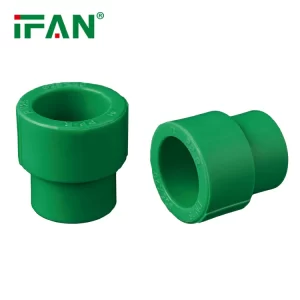
- Full welding compatibility with normal PPR fittings
Available Types
- Green outer (most common)
- White outer with red stripe
- Gray outer for industrial
Installation Tips for FRP Three-Layer
- Use standard PPR welding machine and dies — no special tools
- Peel nothing — weld directly (unlike aluminum-layered)
- Cut with normal PPR scissors — fiberglass cuts easily
- Support every 1.2–1.5 m (still needed, but less critical)
- Mix freely with standard PPR where needed
- Pressure test exactly like regular PPR
Installation is actually easier than aluminum composite.
Three-Layer FRP vs Other PPR Variants
| Type | Expansion Rate | Oxygen Barrier | Welding Ease | Cost | Best For |
|---|---|---|---|---|---|
| Standard PPR | High | No | Easiest | Lowest | Concealed runs |
| PPR-AL-PPR (aluminum) | Very low | Yes | Requires peeling | High | Exposed + oxygen-sensitive |
| PPR-FRP (fiberglass) | Low | No | No peeling | Medium | Exposed heating, long runs |
| PPR-CT | Medium | No | Easiest | Medium | Very high temperature |
FRP offers the best balance for most modern heating projects.
Long-Term Performance
- 50+ year lifespan identical to standard PPR
- Fiberglass never corrodes or degrades
- No delamination risk (co-extruded, not glued)
- Same drinking-water safety as plain PPR
Independent 20-year field studies show zero failures.
Conclusion
PPR three-layer fiberglass composite pipe — featured in premium systems like fusiotherm ppr — revolutionizes installation by cutting thermal expansion 75%, eliminating most expansion loops, and allowing beautiful long straight runs that stay perfectly level for decades. Choose FRP when you want faster installation, cleaner appearance, and rock-solid performance in exposed heating and hot water lines. Get factory-direct certified FRP three-layer PPR in all sizes at the best prices from IFAN at 5580 S Decatur Blvd #114, Las Vegas, NV 89118 — your trusted partner for the most advanced composite piping available.
Connect
IFAN is a Chinese manufacturer of plastic pipes, fittings and valves with 30 years of experience. If you are interested in IFAN copper fittings, copper valves, plastic pipes and fittings, please contact us. IFAN offers you a variety of standard pipes to meet your specific needs. Click below to learn more about IFAN’s wide range of affordable and cost-effective valve products and piping system related products.
We will reply your email or fax within 24 hours.
You can call us at any time if there is any question on our production.
For more information,pls visit our webside https://waterpipefitting.com/
Pls Mailto: [email protected]
Whatsapp: +86 13325756195