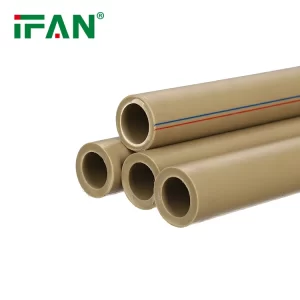
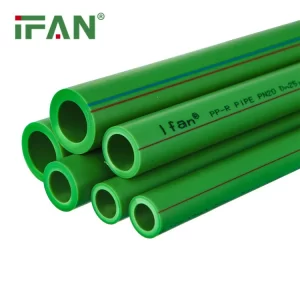
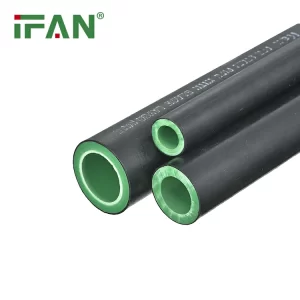
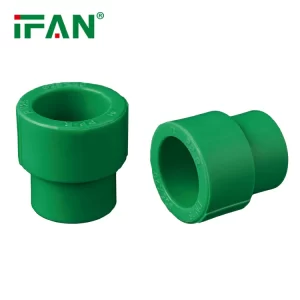
PPR pipes come in different Standard Dimension Ratios (SDR), with SDR 6 and SDR 11 being the most common choices for hot and cold water systems. The difference between PPR pipe SDR 6 and SDR 11 lies in wall thickness, pressure rating, and application suitability. This article explains the technical differences, performance characteristics, and practical uses of both standards. It includes an FAQ section, buying guide, and installation tips to help you choose wisely. Whether you need high-pressure supply lines or cost-effective distribution pipes, this guide ensures you select the perfect PPR pipe for your project.
FAQ: Common Questions About PPR Pipe SDR 6 vs SDR 11
What does SDR mean in PPR pipes?
SDR stands for Standard Dimension Ratio, the ratio of outside diameter to wall thickness. Lower SDR means thicker walls and higher pressure resistance.
Which is stronger: SDR 6 or SDR 11?
SDR 6 has thicker walls, so it handles higher pressure (PN25) than SDR 11 (PN16). Choose SDR 6 for demanding applications.
Can I use SDR 11 for hot water?
Yes, SDR 11 works for hot water up to 70°C at lower pressure. SDR 6 manages 95°C with full PN25 rating.
Is SDR 6 more expensive than SDR 11?
Yes, by 30–40% due to more material. However, SDR 6 saves on fittings in high-pressure systems.
Do SDR 6 and SDR 11 pipes use the same fittings?
Yes. Both follow DIN 8077/8078 standards and fuse with identical PPR fittings.
Basic Definition and Features of PPR Pipe Systems
PPR (Polypropylene Random Copolymer) pipe systems transport hot and cold water through heat-fused joints. SDR defines pressure capacity:
- SDR 6: Wall thickness = diameter / 6. Example: 20mm pipe has 3.4mm walls, rated PN25.
- SDR 11: Wall thickness = diameter / 11. Example: 20mm pipe has 1.9mm walls, rated PN16.
Key features include:
- Corrosion resistance: PPR never rusts or scales.
- Thermal insulation: Low conductivity reduces heat loss.
- 50+ year lifespan: Proper installation guarantees decades of service.
- Smooth interior: Minimizes friction and bacterial growth.
These qualities make PPR the modern plumbing standard.
Common Uses and Application Industries
SDR 11 serve different pressure needs:
- High-rise building risers (15+ floors)
- Boiler supply lines (90–95°C)
- Industrial process water
- Solar heating systems
SDR 11 applications:
- Residential distribution (1–5 floors)
- Underfloor heating loops
- Cold water supply
- Irrigation mains
Their versatility covers residential, commercial, and industrial projects.
Buying Guide: How to Choose Between SDR 6 and SDR 11
Select the right SDR with these factors:
- Pressure requirements: Calculate total head + pump pressure. Over 12 bar needs SDR 6.
- Temperature: Hot water above 70°C requires SDR 6 for safety margin.
- Cost optimization: Use SDR 6 only where necessary; SDR 11 saves 25–35% in material.
- Material purity: Choose 100% virgin PPR Type 3, never recycled.
- Color coding: Green for cold, white/gray for hot water lines.
- Certifications: Require DIN 8077/8078, NSF/ANSI 61, ISO 15874 test reports.
Always verify pressure test certificates from reputable labs.
Installation Tips for PPR Pipes
Proper fusion ensures system integrity:
- Use correct socket sizes: Match pipe SDR to welding tool dies.
- Follow heating times: SDR 6 needs 7–8 seconds (20mm), SDR 11 needs 5 seconds.
- Cut squarely: Use PPR cutter for 90° cuts.
- Align perfectly: Hold 5–10 seconds after fusion to prevent distortion.
- Pressure test: Wait 24 hours, then test at 1.5x working pressure for 1 hour.
- Support adequately: Clip every 80 cm for SDR 6, 100 cm for SDR 11.
Never mix SDR ratings in the same pressure zone.
Material Comparison: PPR Pipe Systems vs Other Pipe Systems
PPR outperforms traditional materials:
| Feature | PPR SDR 6 | PPR SDR 11 | Copper | Galvanized Steel |
|---|---|---|---|---|
| Pressure Rating | PN25 | PN16 | Unlimited | PN10–16 |
| Max Temperature | 95°C continuous | 70°C continuous | 100°C+ | 60°C |
| Wall Thickness (20mm) | 3.4 mm | 1.9 mm | 0.9 mm | 2.0 mm |
| Cost per meter | $1.50–$2.20 | $0.90–$1.30 | $4.00–$6.00 | $2.00–$3.00 |
| Installation | Heat fusion | Heat fusion | Soldering | Threaded |
| Corrosion | None | None | Pitting in hard water | Rusts quickly |
| Lifespan | 50+ years | 50+ years | 50+ years | 20–30 years |
| Best For | High-pressure hot water | General plumbing | Premium visible runs | Cold water only |
PPR offers the best cost-performance ratio for modern systems.
Conclusion
The difference between PPR pipe SDR 6 and SDR 11 determines system safety and cost. SDR 6 delivers maximum pressure and temperature resistance for demanding applications, while SDR 11 provides efficient performance for standard residential use. By matching SDR to your pressure and temperature needs, you build reliable, long-lasting plumbing. For certified PPR pipes in both SDR 6 and SDR 11, visit IFAN at 5332 Production Dr, Huntington Beach, CA 92649, to explore factory-direct solutions engineered for your specific requirements.
Connect
IFAN is a Chinese manufacturer of plastic pipes, fittings and valves with 30 years of experience. If you are interested in IFAN copper fittings, copper valves, plastic pipes and fittings, please contact us. IFAN offers you a variety of standard pipes to meet your specific needs. Click below to learn more about IFAN’s wide range of affordable and cost-effective valve products and piping system related products.
We will reply your email or fax within 24 hours.
You can call us at any time if there is any question on our production.
For more information,pls visit our webside https://waterpipefitting.com/
Pls Mailto: [email protected]
Whatsapp: +86 13325756195