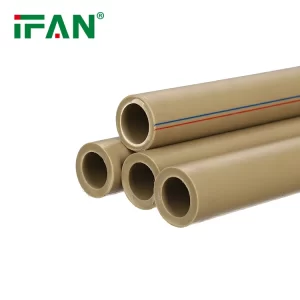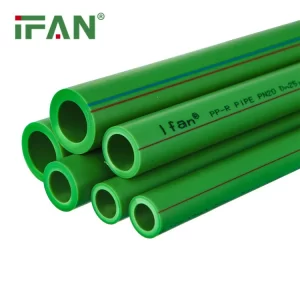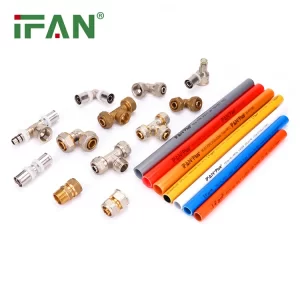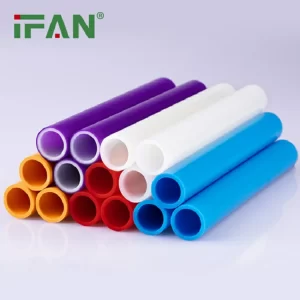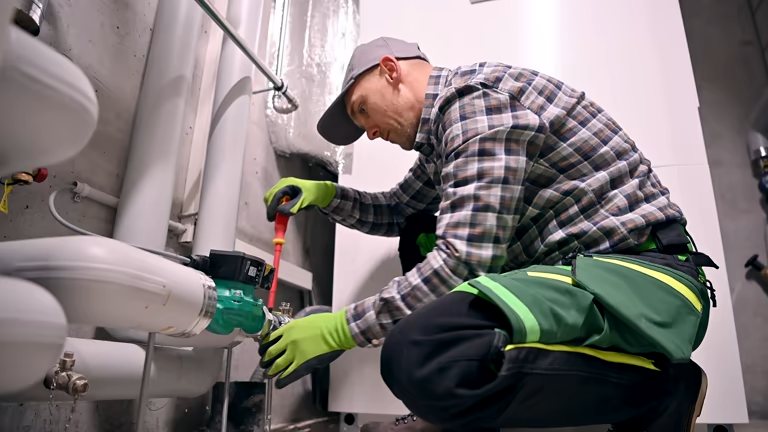
PPR pipes, with their optimized ppr pipe wall thickness, offer unmatched durability and heat resistance for residential heating systems, ensuring efficient hot water delivery and radiant floor heating. The wall thickness, defined by Standard Dimension Ratios (SDR) like 6 or 7.4, balances pressure capacity and thermal stability for long-term performance. This guide explains why PPR excels in heating applications, detailing its specifications, uses, and installation best practices. It includes an FAQ section, buying guide, and material comparison to help you build a reliable system. Whether you install underfloor heating or boiler supply lines, PPR delivers cost-effective, leak-free solutions.
FAQ: Common Questions About PPR Pipe Wall Thickness
How does wall thickness affect PPR pipe performance?
Thicker walls (lower SDR, e.g., SDR 6) handle higher pressure (PN25) and temperatures, ideal for heating systems.
What’s the wall thickness of a 25mm PPR pipe?
For PN20, it’s 4.2mm (SDR 6); for PN16, it’s 3.5mm (SDR 7.4), impacting flow and durability.
Can thin-walled PPR pipes handle hot water?
Yes, but PN20 or PN25 with thicker walls (SDR 6) is better for 95°C heating systems.
Does thicker wall PPR cost more?
Yes, PN20 pipes cost 20–30% more than PN16 ($1.50–$2.50/m vs $0.90–$1.50/m for 25mm).
How does wall thickness impact installation?
Thicker walls require longer fusion times (8–10 seconds for 25mm PN20) for strong joints.
Basic Definition and Features of PPR Pipe Systems
PPR (Polypropylene Random Copolymer) pipes transport hot and cold water through heat-fused joints, creating seamless, leak-proof systems. Wall thickness, determined by SDR (diameter divided by wall thickness), defines pressure and temperature capacity. Key features include:
- High heat tolerance: Sustains 95°C at PN20, perfect for heating systems.
- Corrosion resistance: No rust or scaling, ensuring clean water flow.
- Low thermal conductivity: 0.22 W/m·K minimizes heat loss in hot water runs.
- Smooth interior: 0.007 mm roughness reduces friction and noise.
These qualities make PPR ideal for residential heating applications.
Common Uses and Application Industries
PPR pipes excel in residential heating scenarios:
- Radiant floor heating: Loops for even heat distribution in homes.
- Boiler supply lines: Hot water delivery to radiators and baseboards.
- Hydronic heating systems: Main lines for multi-zone heating setups.
- Solar thermal integration: Supply lines from solar collectors to storage tanks.
- Apartment complexes: Hot water distribution for multi-unit buildings.
Their reliability supports both new builds and retrofits.
Buying Guide: Selecting PPR Pipes for Heating Systems
Choose PPR pipes with these criteria:
- Wall thickness: Select PN20 (SDR 6, 4.2mm for 25mm) or PN25 for high-pressure heating.
- Material quality: Use 100% virgin PPR Type 3, never recycled blends.
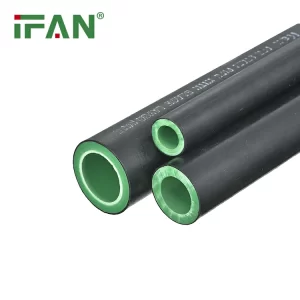
- Fiber reinforcement: Opt for PPR-FB-PPR to reduce thermal expansion by 75%.
- Certifications: Require NSF/ANSI 61, ISO 15874, or DVGW for potable water safety.
- Color coding: White or red-striped for hot water identification.
- Diameter selection: 25mm for main lines, 20mm for branches in heating systems.
Request 1,000-hour pressure test data at 95°C for reliability.
Installation Tips for PPR Pipes in Heating Systems
Proper installation ensures efficiency and longevity:
- Use precise fusion tools: Heat at 260°C, 8 seconds for 25mm PN20 pipes.
- Cut cleanly: PPR scissors create 90-degree edges for strong joints.
- Insulate all lines: 13–19mm foam reduces heat loss by 15–20%.
- Support frequently: Clip every 32 inches to prevent sagging under heat.
- Pressure test: Run 1.5x working pressure (435 psi for PN20) for 2 hours after 24-hour cooling.
- Account for expansion: Allow 5–10mm gaps at fixed points for standard PPR.
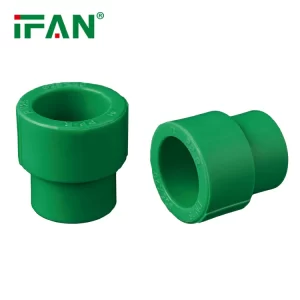
Never mix PPR with non-compatible fittings or tools.
Material Comparison: PPR Pipe Systems vs Other Pipe Systems
PPR outperforms alternatives for residential heating:
| Feature | PPR Pipe (PN20) | Copper | PEX | CPVC |
|---|---|---|---|---|
| Max Temperature | 95°C | 100°C | 82°C | 82°C |
| Wall Thickness (25mm) | 4.2mm (SDR 6) | 0.9mm | 2.0mm | 2.3mm |
| Pressure Rating (1″) | 290 psi at 20°C | Unlimited | 160 psi | 145 psi |
| Thermal Expansion | 0.15 mm/mK | 0.017 mm/mK | 0.20 mm/mK | 0.07 mm/mK |
| Cost per Foot (1″) | $1.50–$2.50 | $5.00–$8.00 | $0.80–$1.50 | $0.90–$1.40 |
| Lifespan | 50+ years | 50+ years | 40–50 years | 30–50 years |
| Best For | Heating, hot water | Premium visible runs | Retrofits | Budget hot water |
PPR offers superior heat tolerance and cost efficiency.
Conclusion
PPR pipes, with optimized ppr pipe wall thickness like SDR 6 for PN20, deliver exceptional durability and heat resistance for residential heating systems. Their ability to handle 95°C, resist corrosion, and maintain smooth flow makes them ideal for radiant heating and boiler systems. By choosing certified PPR, using proper fusion techniques, and insulating lines, you ensure a leak-free, efficient heating network for decades. For high-quality PPR pipes tailored for heating applications, visit IFAN at 5580 S Decatur Blvd #114, Las Vegas, NV 89118, to explore factory-direct solutions designed for reliable performance.
Connect
IFAN is a Chinese manufacturer of plastic pipes, fittings and valves with 30 years of experience. If you are interested in IFAN copper fittings, copper valves, plastic pipes and fittings, please contact us. IFAN offers you a variety of standard pipes to meet your specific needs. Click below to learn more about IFAN’s wide range of affordable and cost-effective valve products and piping system related products.
We will reply your email or fax within 24 hours.
You can call us at any time if there is any question on our production.
For more information,pls visit our webside https://waterpipefitting.com/
Pls Mailto: [email protected]
Whatsapp: +86 13325756195