PPR pipe slashes residential fire sprinkler system installation using PPR pipe costs 40% versus CPVC while meeting NFPA 13D flow demands with zero corrosion and 50-year life—installers fuse networks in hours that save lives for decades. This guide walks you through code-approved PPR layouts, head spacing, pressure calculations, and fusion tricks, plus definitions, applications, buying tips, step-by-step installation, and material comparisons. You finish with a compliant, silent system that activates in 45 seconds.
Frequently Asked Questions (FAQ)
- Does NFPA 13D allow PPR pipe for residential fire sprinklers? Yes—NFPA 13D 2022 lists PPR under Section 6.3.3 when rated 175 psi at 120°F and installed per manufacturer listings. Use UL-listed PPR and heads.
- What size PPR do I run for a 2,500 sq ft home with 12 sprinklers? Feed with 1-inch (32 mm) from the riser, branch ¾-inch (25 mm) to groups of 3–4 heads, drop ½-inch (20 mm) to each head—delivers 13 gpm minimum at 7 psi per head.
- Can I mix PPR with CPVC heads in the same system? Yes—use PPR-to-CPVC transition fittings with fusion on PPR side, solvent on CPVC. Keep PPR for mains and risers; CPVC heads cost less.
- How do I prevent freezing in PPR fire lines in cold climates? Install antifreeze loop with propylene glycol tested to -20°F or dry system with air compressor—PPR handles 50% glycol without swelling.
- What pressure test do I perform on PPR fire sprinklers? Hydrostatic test at 200 psi for 2 hours per NFPA 13D—zero drop allowed. Follow with 50 psi air test for 24 hours in dry systems.
Basic Definition and Features of PPR Pipe Systems
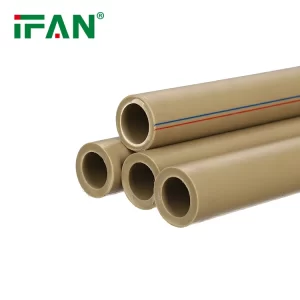
PPR means polypropylene random copolymer—a heat-resistant plastic that installers fuse into leak-proof networks. Socket fusion melts pipe and fitting at 500°F, creating joints stronger than the wall. No corrosion, no scale, no leaks.
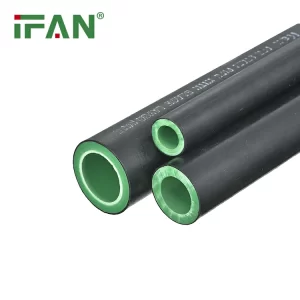
Key features for fire service include 175 psi rating at 120°F, thermal expansion 0.15 mm/m/°C standard or 0.03 mm/m/°C fiber-reinforced. The glassy bore (0.007 mm roughness) prevents clogging. PPR resists 50% glycol and chlorine.
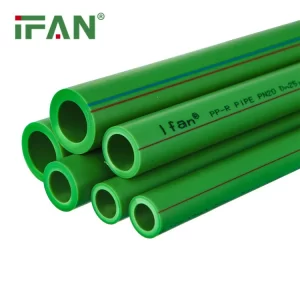
Hygiene shines—PPR never rusts, never leaches metals. Colors code function: red stripe for fire, green for cold, white for hot. Diameters range 20 mm to 110 mm. Wall thickness sets the SDR—SDR 7.4 or 9 for fire.
Modern PPR carries UL listing for fire sprinklers when stabilized. Sound dampening silences flow. Weight stays 0.1 kg per meter—one worker lifts a 13-foot stick. These traits make PPR code-ready for home fire protection.
With basics clear, let’s see where PPR saves lives daily.
Common Uses and Application Industries
New home builders install PPR multipurpose systems—fire sprinklers share potable cold lines. One 1-inch PPR feed serves sinks and 12 heads. Retrofits in tract homes replace CPVC with PPR—fits same chases.
Luxury custom homes run dedicated 1.25-inch PPR fire risers from garage to attic—concealed heads in every room. Townhouses share 2-inch PPR standpipes between units—valves isolate each.
Senior living facilities pipe PPR to 50 heads per wing—quick response saves mobility-limited residents. Schools add PPR sprinklers in dorms—NFPA 13D compliant. Small offices use PPR for light-hazard occupancy.
Across sectors, PPR cuts install time 50%. Now let’s spec code-approved parts.
Buying Guide: Key Factors to Consider
Design per NFPA 13D—maximum 2 heads per room, 130 sq ft coverage each. Size pipe for 13 gpm at remotest head. Use the chart for residential fire sprinkler system installation using PPR pipe.
| Home Size | Heads | Riser Size | Branch Size | Head Drop |
|---|---|---|---|---|
| 1,500 sq ft | 8 | 1-inch | ¾-inch | ½-inch |
| 2,500 sq ft | 12 | 1-inch | ¾-inch | ½-inch |
| 4,000 sq ft | 18 | 1.25-inch | 1-inch | ¾-inch |
Choose UL-listed PPR with red stripe—175 psi at 120°F minimum. Pick quick-response heads (K=5.6, 155°F). Buy antifreeze valves and test ports.
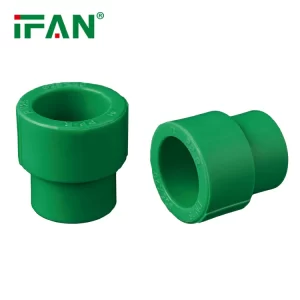
Certifications matter—UL 1821 for pipe, NFPA 13D listing. Budget $1.80 per meter 1-inch PPR, $15 per head. Stock 10% extra tees—future bedrooms happen. These choices lock in compliance.
With parts ready, flawless installation prevents every failure.
Installation Tips and Precautions
Plan layout—heads 8–12 feet apart, 6 inches from walls. Support PPR every 3 feet with plastic clips. Fusion weld in 70°F space—cold pipe needs preheat.
Cut square, chamfer 15 degrees. Heat socket tool to 500°F. Insert pipe and fitting: 5 seconds for 20 mm, 12 seconds for 32 mm. Join within 4 seconds, twist 1/8 turn, hold 10 seconds.
Install flow switch and inspector’s test valve at end of line. Slope 1/4 inch per 10 feet to drain. Fill with water or antifreeze—never air in wet systems.
Hydro test at 200 psi for 2 hours—zero drop. Label riser: “FIRE SPRINKLER – DO NOT SHUT OFF.” Wear gloves—molten PPR sticks. These steps turn good pipe into life-saving flow.
To see why PPR beats alternatives, study the comparison.
PPR Pipe Systems vs. Other Material Pipe Systems: A Comparison
| Aspect | PPR (Fire Sprinkler) | CPVC | Copper | Black Steel |
|---|---|---|---|---|
| NFPA 13D Approval | Yes (UL-listed) | Yes | Yes | Light hazard only |
| Corrosion in Wet System | Zero | Chlorine attack | Pinholes | Rust |
| Install Speed | 100 ft/hour | 60 ft/hour | 40 ft/hour | 20 ft/hour |
| Cost 1″ per meter | $1.80 | $2.50 | $6.50 | $4.00 |
| Freeze Tolerance | Expands & recovers | Cracks | Bursts | Cracks |
| Lifespan | 50–100 years | 25–50 years | 50 years | 20–40 years |
| Head Compatibility | All types | CPVC only | All | All |
PPR wins on cost and life. CPVC fits budget. Copper handles heat. Steel rusts. Choose PPR for home fire safety.
Conclusion
Residential fire sprinkler system installation using PPR pipe meets NFPA 13D with 1-inch risers, ¾-inch branches, and UL-listed fusion—your home gains 45-second fire control for half a century. Follow the spacing chart, test at 200 psi, and label every valve—your family sleeps safer tonight.
Need UL-listed PPR today? Visit our Huntington Beach warehouse at 5332 Production Dr, Huntington Beach, CA 92649. We stock every fire-rated size, head, and fusion tool for immediate pickup.
Connect
IFAN is a Chinese manufacturer of plastic pipes, fittings and valves with 30 years of experience. If you are interest in IFAN copper fittings, copper valves, plastic pipes and fittings, please contact us. IFAN offers you a variety of standard pipes to meet your specific needs. Click below to learn more about IFAN’s wide range of affordable and cost-effective valve products and piping system related products.
We will reply your email or fax within 24 hours. You can call us at any time if there is any question on our production.
For more information,pls visit our webside https://waterpipefitting.com/
Pls Mailto: [email protected]
Whatsapp: +86 13325756195