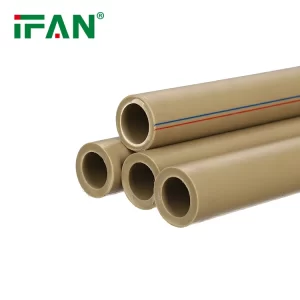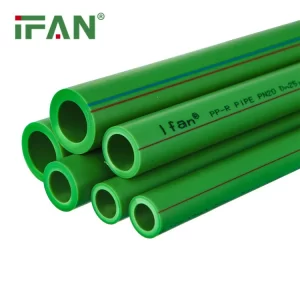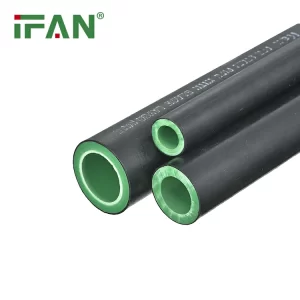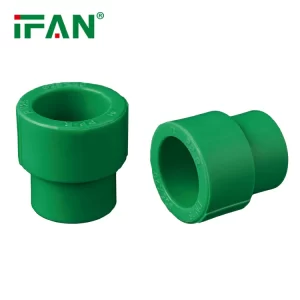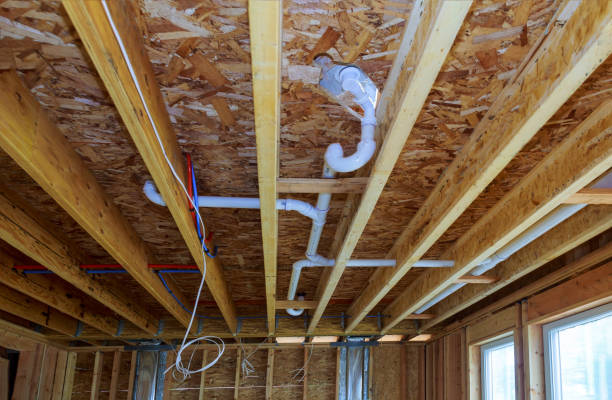
PPR pipe slashes energy bills 15–20% in chilled water loops because its ultra-low thermal conductivity keeps 44°F water ice-cold from chiller to fan coil with zero condensation sweat. This guide proves why PPR pipe for chilled water air conditioning systems beats copper and steel, shares sizing tricks, insulation musts, and fusion tips, plus definitions, applications, buying strategies, installation steps, and a clear material showdown. You finish with a silent, drip-free AC system that runs for 50 years.
Frequently Asked Questions (FAQ)
- Can PPR pipe really handle 39°F chilled water without cracking? Yes—PPR stays flexible down to -4°F and resists brittle failure. Use SDR 11 or lower walls and insulate every inch to prevent surface condensation.
- How much insulation do I wrap on PPR pipe for chilled water air conditioning systems? Apply 1-inch closed-cell foam (R-6) on pipes up to 2-inch diameter in 75°F ambient spaces. Bump to 1.5-inch in humid zones to keep surface temperature above 55°F dew point.
- Does glycol mixture corrode PPR in chilled loops? No—PPR shrugs off propylene glycol up to 50% concentration and pH 6–9. Flush annually to remove debris, but the pipe itself never pits.
- What size PPR do I run for a 20-ton chiller serving 10 fan coils? Use 3-inch (90 mm) from chiller to header, 2-inch (63 mm) mains, 1-inch (32 mm) drops—keeps velocity 4–6 ft/s and head loss under 3 ft/100 ft.
- Will PPR expand or contract too much in a 39°F to 100°F swing? Fiber-reinforced PPR moves only 0.03 mm/m/°C—less than 0.1 inch in a 50-foot run. Standard PPR needs expansion loops every 65 feet.
Basic Definition and Features of PPR Pipe Systems
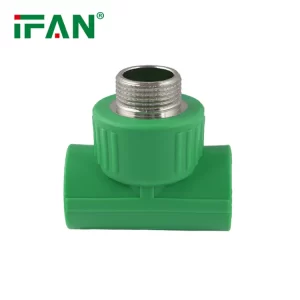
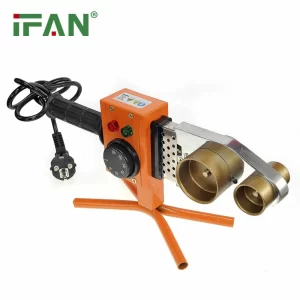
PPR stands for polypropylene random copolymer—a tough, lightweight plastic that installers fuse into seamless networks. Socket fusion melts pipe and fitting at 500°F, creating joints stronger than the wall. No corrosion, no leaks, no noise.
Key features shine in chilled service. Thermal conductivity sits at 0.24 W/m·K—10 times lower than copper—so 44°F water loses just 1°F over 200 feet. Thermal expansion measures 0.15 mm/m/°C standard or 0.03 mm/m/°C fiber-reinforced. The mirror-smooth bore (0.007 mm roughness) prevents biofilm and cuts pump energy 20%.
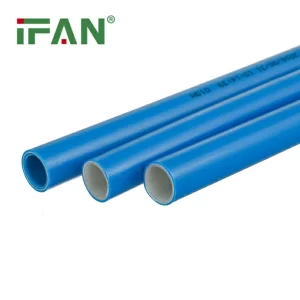
Hygiene leads—PPR never rusts, never leaches metals. Colors code function: green or blue for cold/chilled, white for hot, gray for fiber. Diameters range 16 mm to 160 mm. Wall thickness sets the SDR—SDR 11 handles 145 psi cold.
Modern PPR resists UV and chlorine when stabilized. Sound dampening silences flow. Weight stays 0.1 kg per meter—one worker lifts a 13-foot stick. These traits make PPR the smart pick for chilled water.
With fundamentals clear, let’s see where PPR cools buildings daily.
Common Uses and Application Industries
Office towers run 4-inch PPR chilled mains from basement chillers to rooftop AHUs—insulated lines stay dry in 90°F mechanical rooms. Hotels pipe 44°F water to 500 fan coils with 1.5-inch PPR drops—silent guest rooms.
Hospitals chill MRI suites with 2-inch PPR loops—zero magnetic interference versus steel. Data centers circulate 45°F water through 3-inch PPR under raised floors—low expansion prevents rack shifts.
Schools retrofit 1960s buildings with 2.5-inch PPR chilled lines—fits existing chases. Supermarkets cool display cases with 1-inch PPR laterals—condensation-free. Pharmaceutical plants maintain 42°F process cooling with PPR—cleanroom compatible.
Airports distribute chilled water across terminals with 6-inch PPR—buried sections resist ground movement. Across sectors, PPR cuts AC energy 15%. Now let’s spec the perfect pipe.
Buying Guide: Key Factors to Consider
Size for velocity 4–6 ft/s. A 30-ton chiller at 60 gpm needs 3-inch (90 mm) main—use the chart for PPR pipe for chilled water air conditioning systems.
| Cooling Load | Flow (gpm) | Main Size | Branch Size |
|---|---|---|---|
| 10 ton | 24 | 2-inch | 1-inch |
| 20 ton | 48 | 3-inch | 1.5-inch |
| 50 ton | 120 | 4-inch | 2-inch |
Pick SDR 9 or 11 for chilled service—thicker walls resist vacuum collapse if pumps cavitate. Choose fiber-reinforced gray pipe—expansion drops 75%, insulation fits tighter. Blue stripe marks chilled water.
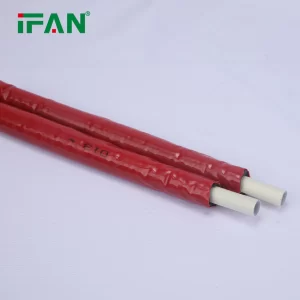
Demand certifications: NSF/ANSI 61 for potable loops, ISO 15874 Class 4/5 for 50-year life at 68°F/10 bar. Buy closed-cell foam sleeves with vapor barrier—1-inch thick minimum. Budget $3 per meter 2-inch PPR, $2.50 per meter insulation.
Stock 10% extra reducers—future fan coils happen. Include vapor stops every 40 feet. These choices lock in ice-cold efficiency.
With materials ready, flawless installation prevents every drip.
Installation Tips and Precautions
Insulate first—slide foam sleeves over pipe before fusion; tape seams with vapor-barrier tape. Fusion weld in 70°F shop if possible—cold pipe needs 10-second preheat.
Cut pipe square, chamfer 15 degrees. Heat socket tool to 500°F exactly. Insert pipe and fitting: 18 seconds for 63 mm, 30 seconds for 90 mm. Join within 4 seconds, twist 1/8 turn, hold 20 seconds.
Support every 3 feet with insulated clips—prevent insulation crush. Add vapor stops: peel insulation 6 inches, seal with mastic, re-cover. Slope lines 1/4 inch per 10 feet to air vents.
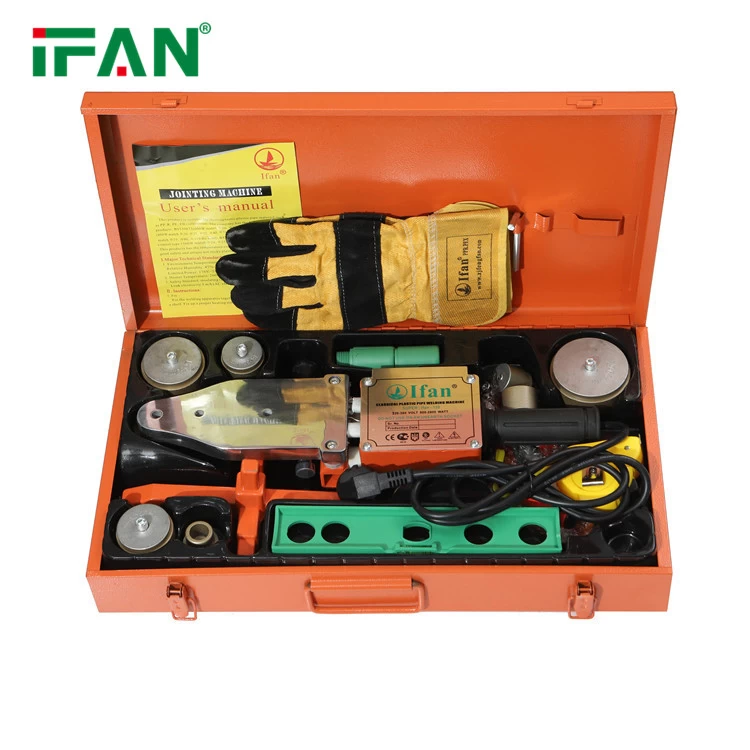
Pressure test at 150 psi with 50°F water for 2 hours—watch for fog on insulation. Flush with chilled water to remove air. Wear gloves—molten PPR sticks. These steps turn good pipe into drip-free cooling.
To see why PPR beats metals, study the comparison.
PPR Pipe Systems vs. Other Material Pipe Systems: A Comparison
| Aspect | PPR (Chilled Water) | Copper | Black Steel | CPVC |
|---|---|---|---|---|
| Heat Loss (44°F water) | 1°F/200 ft | 10°F/200 ft | 12°F/200 ft | 3°F/200 ft |
| Condensation Risk | Zero with insulation | High without | High | Moderate |
| Corrosion in Glycol | None | Pitting | Rust | Swelling |
| Joint Method | Fusion 20 sec | Solder 3 min | Thread/weld | Solvent 1 hr |
| Cost 2″ per meter | $4.50 | $18 | $12 | $6 |
| Lifespan | 50–100 years | 30–50 years | 20–40 years | 25–50 years |
| Installation Speed | 80 ft/hour | 30 ft/hour | 20 ft/hour | 50 ft/hour |
PPR wins on efficiency and life. Copper transfers heat. Steel rusts. CPVC softens. Choose PPR for chilled water AC.
Conclusion
PPR pipe for chilled water air conditioning systems keeps water cold, pipes dry, and bills low for half a century. Size for 4–6 ft/s velocity, insulate with 1-inch foam, fuse at 500°F, and support every 3 feet—your AC coils frost silently forever.
Need insulated PPR today? Visit our Huntington Beach warehouse at 5332 Production Dr, Huntington Beach, CA 92649. We stock every chilled-water size, sleeve, and fusion tool for immediate pickup.
Connect
IFAN is a Chinese manufacturer of plastic pipes, fittings and valves with 30 years of experience. If you are interest in IFAN copper fittings, copper valves, plastic pipes and fittings, please contact us. IFAN offers you a variety of standard pipes to meet your specific needs. Click below to learn more about IFAN’s wide range of affordable and cost-effective valve products and piping system related products.
We will reply your email or fax within 24 hours. You can call us at any time if there is any question on our production.
For more information,pls visit our webside https://waterpipefitting.com/
Pls Mailto: [email protected]
Whatsapp: +86 13325756195